Field notes: the pond that changed color between two monthly passes
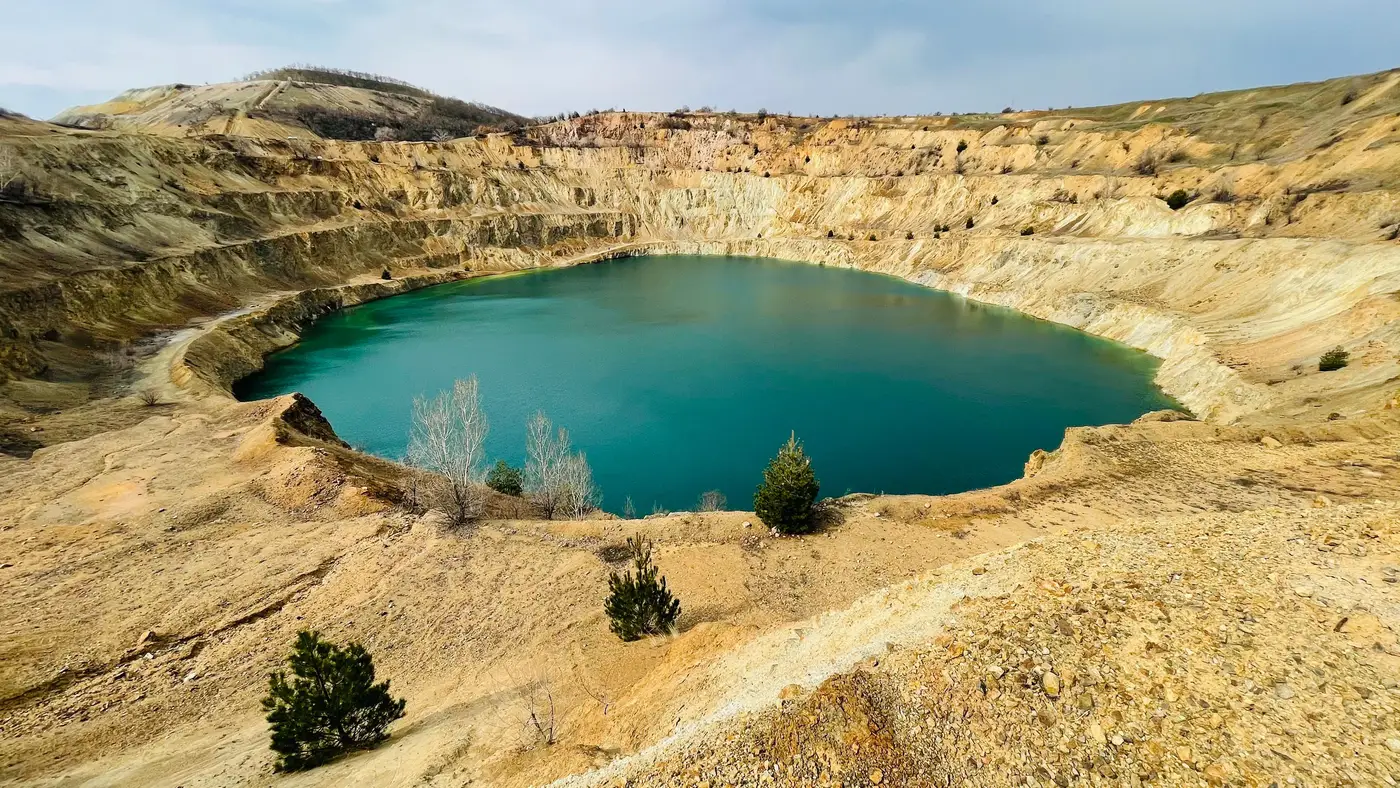
We caught it on the September pass: a settling pond on a legacy copper-zinc site that had been a dull gray-green in August, suddenly rendered in the imagery as a sharp turquoise ring tightening around a paler center. Nothing on the ground had changed that we knew of. No new discharge permit, no reported excursion, no call from the site operator. Just two frames, thirty-one days apart, and a color shift that would have taken a field crew a half-day round trip to confirm or dismiss.
This is the kind of thing that makes people nervous about remote screening, and it should. A color change in a pond is a prompt to go check something, not a result you can log on its own. The temptation is to read the ochre or turquoise tone as if it were a pH reading by itself, and that's worth resisting. The two-pass comparison is where the useful work actually starts.
Turquoise in a mine-affected pond is usually telling you something about dissolved copper or aluminum precipitates, or about colloidal particles scattering light in that blue-green range once the water column clears of suspended sediment. Ochre, the more familiar signature for anyone who's spent time around AMD sites, is ferric hydroxide and related iron precipitates dropping out as the water oxidizes and the pH climbs past the point where iron stays dissolved. Neither color is a fixed address. A pond can run ochre through a stable discharge for years and then shift color because of a seasonal turnover, a rain event that changed the oxidation state in the top few feet, or a berm failure nobody's filed paperwork on yet.
What made the September frame worth a second look wasn't the turquoise itself. It was the contrast with August. A single snapshot of a turquoise pond tells you almost nothing if you don't know what it looked like a month before, or a year before at the same point in the seasonal cycle. Spring runoff dilutes a lot of ponds into a paler version of themselves. Late summer stratification does the opposite, concentrating whatever's precipitating near the surface. Without that baseline, you're reading one word out of a sentence.
We pulled the site's prior four passes to check whether this was a trend or a one-off. It leaned toward one-off: the pond had sat in roughly the same gray-green range since spring, with no gradual drift toward turquoise that would suggest a slow change in loading. A sudden jump like that, with no slow build-up beforehand, reads more like a short-term event: a tailings-line release, a pump failure that let an older impoundment mix forward, or just heavy rain that stirred up bottom sediment that had been sitting undisturbed for a year. None of those are things you can tell apart from color alone. All of them are worth a site visit, and a flagged month with a known cause beats an unflagged quarter with none.
That's the actual value of running this monthly rather than annually or on request. A single contaminated-looking pond, found once, is a data point. The same pond watched across twelve passes a year starts to show you its normal range, which is the only thing that makes an abnormal reading mean something. If you're screening a watershed with legacy workings scattered across it, the question isn't whether any single pond looks bad this month. It's which ponds just left their own baseline, and that's a pattern you need a time series to see at all. Mine Water Quality builds exactly that time series into a monthly flagged-pond and plume-extent layer, so a shift like the one we saw in September shows up against its own history instead of in isolation.
If you've got a watershed with enough legacy or active workings that you've lost track of which pond last looked normal, that's worth a look before the next rain event resets the picture again.