What is yellow boy? The iron precipitate behind acid mine drainage
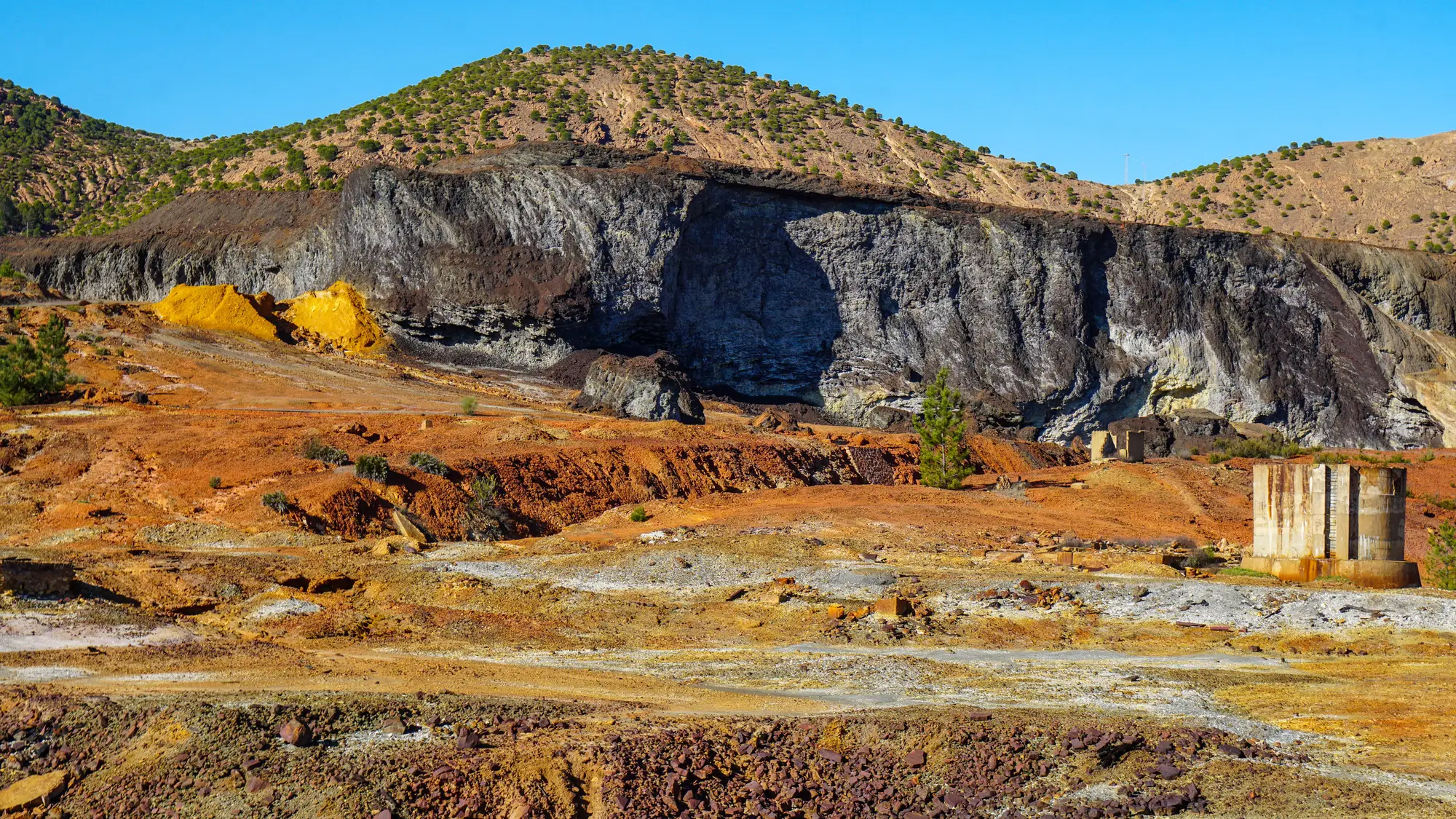
If you've walked a stream below an old coal seam or a sulfide ore working and seen the rocks coated in a rusty orange sludge that won't wash off, you've met yellow boy. It's not a technical term dreamed up in a lab. Miners and stream wardens have called it that for well over a century, and the name has stuck because it describes exactly what you're looking at: a thick, yellow-orange coating that settles over cobbles, culverts, and streambanks downstream of acidic mine water.
The chemistry in plain terms
Yellow boy is mostly ferric hydroxide, sometimes mixed with ferric oxyhydroxide and a bit of jarosite depending on the water chemistry. It forms in two steps. First, pyrite (iron sulfide) in mine spoil, waste rock, or exposed coal seams oxidizes when it meets air and water, releasing ferrous iron and sulfuric acid into the drainage. That water is often clear or pale at the point of discharge, which surprises people who expect contaminated water to look obviously bad from the start.
Second, as that acidic, iron-rich water moves downstream and picks up oxygen, or hits a zone where pH climbs back toward neutral, the dissolved ferrous iron oxidizes to ferric iron and drops out of solution as a solid. That solid is the ochre coating. It smothers streambed gravel, clogs the interstitial spaces fish need for spawning, and it's often the first visual tell that a watershed has an acid mine drainage problem long before anyone pulls a water sample.
Why the color matters for screening
For a regulator or an ESG analyst trying to get a read on a watershed, yellow boy is a field signature you can see and photograph, which makes it useful and also a little misleading if you only look at one spot. The precipitate doesn't form right at the discharge point. It forms downstream, wherever pH and oxygen conditions line up, so a plume can travel a surprising distance before it turns the streambed orange. That lag means a site visit focused on the obvious tailings pond or adit can miss a plume that's already staining a tributary a mile downstream.
Yellow boy isn't the only precipitate you'll see in mine drainage. Aluminum hydroxide precipitates white to pale gray at a different pH range than iron hydroxide. Copper-bearing drainage can leave a turquoise or blue-green tint instead, which is its own signature worth tracking separately. Treating every stained rock as the same problem, or assuming one color rules out an issue, is a common way to miss something during a quick walkover.
What this means for a watershed screen
Ground-truthing every discharge point and every reach of a watershed by hand takes a field crew weeks, and a lot of legacy workings don't have anyone walking them regularly at all. That's the gap between what a permit file says should be happening and what's actually visible on the ground this month.
Ochre staining, and its turquoise counterpart from copper-bearing drainage, show up in wide-swath multispectral imagery as a distinct signal against the surrounding streambed and vegetation. That's the premise behind a monthly spectral screen for ochre and turquoise signatures across a watershed, flagging ponds and tracing plume extent without requiring someone to sample every reach in person first.
None of this replaces a water sample when you need defensible chemistry for an enforcement action or a permit decision. What it does is tell you where to send the sampling crew, instead of guessing from a windshield survey or waiting for a complaint. If you're trying to get ahead of yellow boy showing up where it shouldn't, that's worth a look.